
Third-party risk management (TPRM) is the continuous program that identifies, tiers, and controls the risks your vendors, subprocessors, and suppliers introduce to your organization. The single most valuable action you can take this week: build a centralized vendor register and apply a simple three-tier risk model to every entry.
Start with these immediate wins:
- Inventory every active vendor that has system access, handles data, or supports a critical business process.
- Apply a basic tier label (low, medium, high) based on data sensitivity and operational criticality.
- Request a current SOC 2 Type II report or ISO 27001 certificate from every Tier 1 (high-risk) vendor before the next contract renewal.
- Flag any vendor without a documented breach notification policy for immediate follow-up.
Table of Contents
- What does third party risk management actually cover, and why does it matter now?
- What specific risks should you assess for every third party?
- Which U.S. standards and regulatory frameworks should guide your controls?
- How should you conduct due diligence and what evidence do you need by tier?
- What contract clauses and onboarding controls do you need in place?
- What should you monitor continuously, and what KPIs matter to leadership?
- How do you handle a vendor incident and safely terminate a vendor relationship?
- What technology options help you scale your TPRM program?
- What does a 90-day TPRM implementation roadmap look like?
- What is the minimum defensible TPRM program, and when should you escalate?
- Key Takeaways
- Why a managed-service approach often makes more sense than going it alone
- Securetechie's TPRM-relevant services and how to evaluate a managed partner
- Useful sources and references
What does third party risk management actually cover, and why does it matter now?
TPRM covers every external party that touches your operations, data, or technology, including direct vendors, subprocessors (the vendors your vendors use), fourth parties further down the chain, and the broader supplier network that keeps your infrastructure running. A payroll processor, a cloud storage provider, a janitorial contractor with building access, and a law firm handling litigation documents all belong on your register.
The business case is straightforward. Organizations depend on external parties for functions they cannot or choose not to run internally, and that dependence creates exposure. A vendor outage can halt your operations. A vendor breach can expose your customers' data. A vendor's financial collapse can leave you scrambling for a replacement mid-contract.
Regulatory pressure has sharpened that exposure considerably. The OCC's guidance for community banks requires a continuous lifecycle approach across planning, due diligence, contracting, onboarding, monitoring, and termination, with more rigorous controls applied to higher-risk or critical activities. The SEC's cybersecurity disclosure rules require public companies to assess and disclose material risks from third parties. CISA has published supply chain risk management resources specifically for small and mid-size organizations. Across financial services, healthcare, and critical infrastructure, regulators treat a weak vendor program as a direct organizational control failure, not a vendor problem.
Statistic callout: According to the 2026 KPMG Global TPRM Survey, regulatory compliance (48%) and cyber risk (37%) are the primary drivers shaping TPRM strategies globally.
The scope question trips up many programs. Subprocessors and fourth parties are often invisible until something goes wrong. When a major cloud provider's infrastructure vendor suffers a breach, every customer of that cloud provider is affected, regardless of whether they ever assessed that fourth party. Mature programs map at least one level beyond the direct vendor relationship for critical services.
Pro Tip: Prioritize controls for any vendor that has direct system access, processes personally identifiable information (PII), or handles protected health information (PHI). These three categories carry the highest regulatory and reputational exposure and should always land in Tier 1.
Tiering model: what controls apply at each level
| Tier | Risk level | Criteria | Evidence required | Reassessment cadence |
|---|---|---|---|---|
| Tier 1 | High | System access, PII/PHI, critical operations | SOC 2 Type II, ISO 27001, pen test summary, SBOM | Annual minimum; event-triggered |
| Tier 2 | Medium | Indirect data access, non-critical support | Security questionnaire, policy docs, reference checks | Within past 12 months |
| Tier 3 | Low | No data access, commodity services | Self-attestation | Every 2–3 years or on contract renewal |
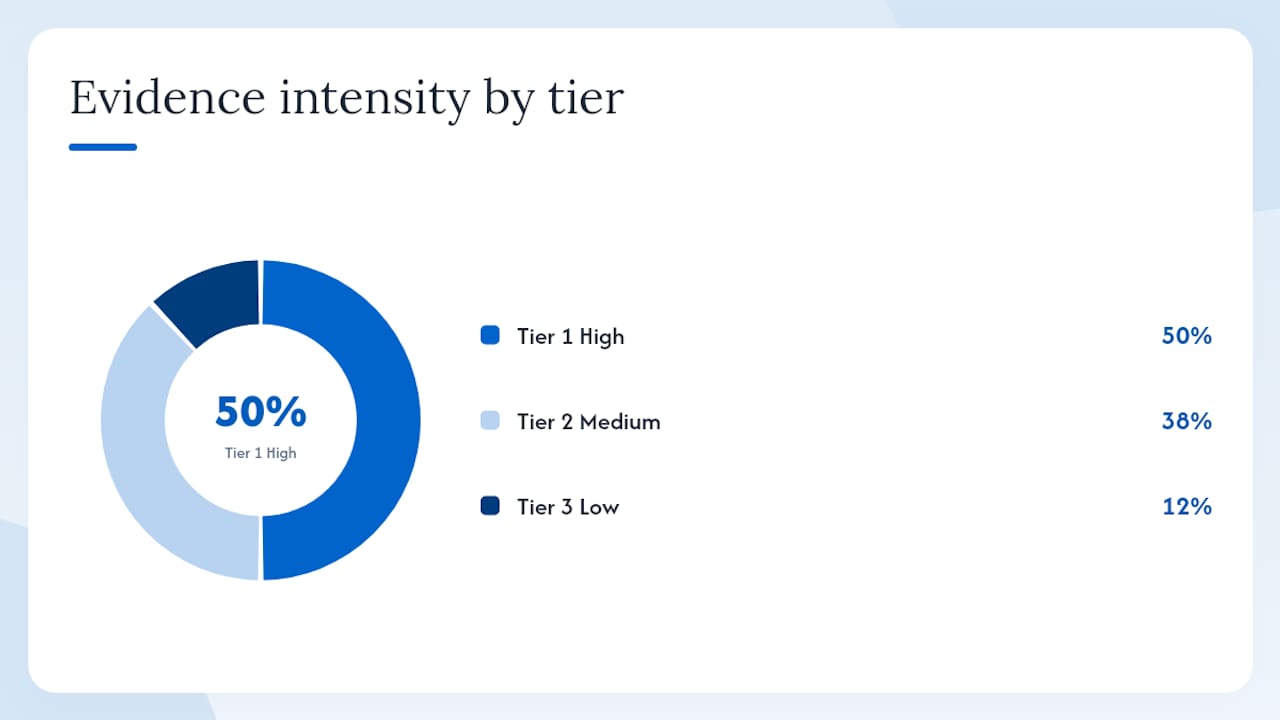
The tiering model is what keeps a TPRM program proportionate. Without it, teams either over-assess low-risk vendors and burn out, or under-assess high-risk ones and miss real exposure. Apply the tier at intake and re-evaluate whenever the vendor's scope of access changes materially.
What specific risks should you assess for every third party?
A practical risk taxonomy gives your team a consistent vocabulary and a structured checklist for intake. Each risk type below carries distinct indicators and can materialize in ways that are easy to underestimate until they do.
Cybersecurity risk is the most commonly cited driver. Vendors with direct network access or privileged credentials are a lateral-movement path into your environment. Red flags include no SOC 2 report, unpatched known vulnerabilities in disclosed software, and no documented incident response plan. The supply chain cyber vulnerability guidance from the networking community reinforces that most supply chain breaches exploit exactly this vector.
Data privacy risk arises when a vendor processes PII, PHI, or payment card data. A vendor without a documented breach disclosure policy, no DPA in place, or operating in a jurisdiction with weak privacy enforcement creates direct regulatory exposure for your organization under HIPAA, state privacy laws, or the SEC's disclosure rules.
Operational risk covers service continuity. A vendor that is the sole provider of a critical function, with no documented business continuity plan and no tested recovery time objective, is a single point of failure. Scenario: your primary cloud infrastructure vendor experiences a multi-day outage with no contractual SLA remedy.

Financial viability risk is often overlooked until a vendor files for bankruptcy mid-contract. Indicators include recent credit downgrades, late filings, or significant customer concentration (they depend on you as much as you depend on them). For software vendors, check whether source code escrow is in place.
Concentration risk occurs when multiple critical functions depend on a single vendor or a small cluster of vendors sharing common infrastructure. The Basel Committee's principles specifically require governance and board oversight of concentration risk in systemically important third-party arrangements, a standard that translates directly to any organization with critical vendor dependencies.
ESG and reputational risk covers labor practices, environmental compliance, and ethical conduct in the supply chain. A vendor publicly linked to labor violations or sanctions exposure can create reputational and legal liability for your organization even when your own operations are clean.
Geopolitical and sanctions risk has become a material concern for any vendor with operations, ownership, or infrastructure in high-risk jurisdictions. OFAC sanctions violations carry strict liability, meaning your organization can be held responsible even without intent if a vendor relationship involves a sanctioned entity.
Risk indicator checklist for vendor intake
- No SOC 2 Type II or equivalent certification
- No documented incident response or breach notification policy
- Subprocessors not disclosed or contractually restricted
- Single-supplier concentration for a critical function
- No business continuity or disaster recovery plan on file
- Operating in a jurisdiction with weak privacy or sanctions enforcement
- Recent adverse financial signals (credit downgrade, late filings)
- No DPA or BAA in place for regulated data processing
Which U.S. standards and regulatory frameworks should guide your controls?
Mapping your controls to recognized frameworks does two things: it gives your team a structured checklist, and it gives auditors and regulators a common language to evaluate your program against. The table below shows the primary frameworks, what they cover, and the vendor artifacts they support.
| Framework / guidance | Scope | Vendor artifact to request |
|---|---|---|
| NIST supply chain standard | ICT supply chain risk management | Vendor questionnaire mapped to NIST controls, SBOM |
| NIST security and privacy controls publication | Federal and enterprise security controls | Vendor control attestation, system security plan excerpts |
| SOC 2 Type II | Service organization controls (availability, security, confidentiality) | Full SOC 2 Type II report with bridge letter if needed |
| ISO 27001 | Information security management system | Current certificate, scope statement, last surveillance audit date |
| OCC Third-Party Guidance | U.S. bank and community bank vendor lifecycle | Vendor management policy, contract terms, monitoring records |
| CISA Vendor SCRM Template | ICT supply chain for SMBs | Completed CISA questionnaire, traceability and patching evidence |
| SEC Cybersecurity Rules | Public company disclosure and incident reporting | Vendor incident notification SLA, material risk assessment |
| NERC CIP | Critical infrastructure / OT environments | Vendor lifecycle documentation, SBOM, patching records |
| BCBS Principles | Financial sector governance and concentration risk | Concentration risk register, board-level oversight documentation |
The CISA Vendor SCRM Template for SMBs is particularly useful for organizations that lack a large compliance team. It provides standardized vendor questions covering traceability, patching practices, and access controls, and it is designed for use without a dedicated GRC platform.
For financial institutions, the OCC guidance and the Basel Committee's third-party principles set the governance floor: board-level accountability, documented risk appetite, and proportional controls across the full vendor lifecycle. These are not aspirational standards; examiners treat them as baseline expectations.
Pro Tip: When a vendor pushes back on a contract clause, cite the specific regulator guidance that requires it. "Our OCC examination guidance requires a right-to-audit clause for critical vendors" is harder to negotiate away than "we'd like to include this." Regulatory backing shifts the conversation from preference to obligation.
How should you conduct due diligence and what evidence do you need by tier?
Due diligence is where most programs either build credibility or accumulate risk. The common failure mode is collecting the same lightweight questionnaire from every vendor regardless of risk level, which creates a false sense of coverage without actually reducing exposure.
A structured, tiered approach follows a simple decision path: scope the vendor, assign a tier, generate the evidence list for that tier, collect and verify the artifacts, document the decision, and enroll the vendor in the appropriate monitoring cadence.
Tier 1 due diligence artifacts
- SOC 2 Type II report: Verify the report is current (issued within the past 12 months), that the scope covers the systems and services your organization uses, and that the auditor's opinion is unqualified. A bridge letter covers the gap between the report period and today.
- ISO 27001 certificate: Confirm the certificate is current, check the scope statement matches the services in scope, and note the next surveillance audit date.
- Penetration test summary: Request an executive summary from a test conducted within the past 12 months. Verify that critical and high findings have been remediated or have documented compensating controls.
- SBOM (Software Bill of Materials): For software vendors, an SBOM identifies the open-source and third-party components in the product. NERC's vendor lifecycle guidance recommends SBOM requests as a standard practice for operational technology environments, and the same logic applies to any software with privileged access to your systems.
- Incident response plan: Request the plan or a summary confirming the vendor has a documented IR process, defined notification timelines, and tested recovery procedures.
Tier 2 due diligence artifacts
- Completed security questionnaire (SIG Lite, CAIQ, or CISA SCRM Template)
- Information security policy and acceptable use policy
- Evidence of patch management and vulnerability scanning practices
- Reference from at least one comparable customer
Tier 3 due diligence artifacts
- Signed vendor attestation confirming compliance with your minimum security requirements
- Contact information for a security or compliance point of contact
What contract clauses and onboarding controls do you need in place?
Contracts are the enforcement mechanism for everything your due diligence uncovered. A well-structured vendor agreement converts risk findings into binding obligations and gives you legal recourse when a vendor fails to meet them.
Onboarding controls checklist
- Provision vendor accounts with least-privilege access, scoped to only the systems and data required for the engagement.
- Enforce multi-factor authentication on all vendor-facing accounts before granting system access.
- Assign a unique, non-shared credential set for each vendor. Rotate credentials at onboarding and on any personnel change at the vendor.
- Complete and execute a DPA or BAA before any regulated data is shared.
- Document the technical configuration baseline: what access was granted, to which systems, under what conditions.
- Brief the vendor's primary contact on your incident notification requirements and confirm the correct escalation path.
- Add the vendor to your monitoring queue at the appropriate tier cadence.
Pro Tip: For clauses a vendor refuses to accept, escalate to legal counsel before conceding. Some vendors, particularly large SaaS platforms, will not modify standard terms. In those cases, document the gap, implement compensating controls (enhanced monitoring, data minimization), and note the accepted risk in your risk register. Never silently accept a gap without a documented decision.
What should you monitor continuously, and what KPIs matter to leadership?
Ongoing monitoring is what separates a mature TPRM program from a compliance checkbox. The goal is to detect changes in a vendor's risk posture between formal reassessments, not just at renewal time.
KPIs to track and report by tier
| KPI | Tier 1 | Tier 2 | Tier 3 |
|---|---|---|---|
| % of vendors with current SOC 2 / ISO cert | Target: 100% | Target: N/A | Target: N/A |
| Time to collect evidence at reassessment | Target: ≤30 days | Target: ≤45 days | Target: ≤60 days |
| Open remediation items (critical/high) | Target: no unmitigated high-risk issues | Target: ≤2 | N/A |
| Mean time to revoke access after termination | Target: ≤4 hours | Target: ≤24 hours | Target: ≤48 hours |
| % of Tier 1 vendors with current contract terms | Target: 100% | Target: 100% | N/A |
For board and senior leadership reporting, a one-page dashboard covering these five KPIs, a count of open Tier 1 findings, and any active vendor incidents gives executives the visibility they need without requiring them to read a full program report. Include a trend line showing improvement over the prior quarter. Regulators and auditors also look for evidence that leadership is receiving and acting on TPRM reporting, so the distribution list and meeting minutes matter as much as the content.
How do you handle a vendor incident and safely terminate a vendor relationship?
Vendor incidents and terminations are the two moments where a weak program creates the most residual exposure. Both require a documented, rehearsed process.
Vendor incident playbook
- Regulatory and customer notification — For U.S. financial institutions, the OCC and banking regulators require prompt notification of significant incidents. For healthcare organizations, HIPAA breach notification rules apply. Public companies must assess whether the incident is material under SEC disclosure rules. Non-banks follow applicable state breach notification laws, which vary by jurisdiction.
Termination and transition checklist
- Revoke all vendor system access within the timeframe specified in your policy (Tier 1: within 4 hours of termination notice).
- Obtain written data return or destruction attestation within 30 days.
- Confirm that all shared credentials, API keys, and certificates issued to the vendor have been rotated or revoked.
- Archive all vendor contracts, assessment records, and incident documentation for the retention period required by your regulatory obligations.
- If the vendor is being replaced, complete a full due diligence cycle on the replacement before migrating any data or access.
- Document the termination decision, the date access was revoked, and the data disposition outcome in your vendor register.
What technology options help you scale your TPRM program?
Manual TPRM processes break down quickly once a vendor register exceeds 50 entries. Technology reduces the manual burden while improving consistency and auditability.
Buy vs. build decision criteria
- Regulatory requirement: — If your organization is subject to OCC examination, SEC disclosure rules, or HIPAA, the audit trail and evidence storage capabilities of a dedicated platform are difficult to replicate manually.
Pro Tip: When evaluating TPRM platforms, ask specifically how the tool handles evidence expiration alerts and what happens when a vendor's SOC 2 lapses. A platform that does not proactively alert you to expiring certifications creates the same gap as no platform at all.
What does a 90-day TPRM implementation roadmap look like?
| Phase | Timeline | Actions | Owner | Time estimate |
|---|---|---|---|---|
| Immediate | Days 0–30 | Build centralized vendor register; assign tiers to all active vendors; identify Tier 1 vendors with no current assessment | Risk/compliance lead | 20–40 hours |
| Immediate | Days 0–30 | Draft or update vendor management policy; define tiering criteria and evidence requirements | Legal + compliance | 10–15 hours |
| Short term | Days 31–60 | Collect Tier 1 evidence (SOC 2, ISO, pen test); review and remediate contract gaps for Tier 1 vendors | Risk analyst + legal | 30–50 hours |
| Short term | Days 31–60 | Set up continuous monitoring for Tier 1 vendors; configure expiration alerts for certifications | IT security | 8–12 hours |
| Next quarter | Days 61–90 | Complete Tier 2 questionnaire cycle; integrate TPRM findings into ERM risk register; deliver first board-level TPRM report | Risk/compliance lead | 20–30 hours |
| Next quarter | Days 61–90 | Conduct tabletop exercise for vendor incident scenario; update incident playbook based on findings | IT security + legal | 8–10 hours |
What is the minimum defensible TPRM program, and when should you escalate?
A minimum defensible program has four components: a maintained vendor register, a documented tiering policy, current SOC 2 Type II or ISO 27001 evidence for every Tier 1 vendor, and an annual reassessment cadence with documented decisions. Organizations that can demonstrate these four elements to an auditor or regulator have a credible baseline, even if the program is not yet mature.
The following scenarios require immediate escalation beyond the baseline:
- A Tier 1 vendor discloses a breach involving your organization's data.
- A regulator (OCC, HHS, SEC) initiates an examination or inquiry that references vendor management.
- Your organization acquires a company with an unknown or undocumented vendor portfolio.
- A Tier 1 vendor announces bankruptcy, acquisition, or a major change in ownership.
- A new regulation or contract requirement imposes vendor management obligations your current program does not meet.
For executives: the minimum program described above is sufficient for most SMBs operating outside heavily regulated industries. Organizations in financial services, healthcare, or critical infrastructure need a more rigorous program aligned to OCC, HIPAA, or NERC standards from the outset. The cost of building that program proactively is a fraction of the cost of remediating a vendor-related breach or failing a regulatory examination.
Key Takeaways
A defensible third-party risk management program requires a maintained vendor register, risk-based tiering, current evidence from Tier 1 vendors, continuous monitoring, and enforceable contract terms reviewed at least annually.
| Point | Details |
|---|---|
| Start with a vendor register | Inventory every active vendor with system access, data handling, or critical function before any other step. |
| Apply three-tier risk model | Assign low, medium, or high risk at intake; Tier 1 vendors require SOC 2 Type II, ISO 27001, and pen test evidence. |
| Enforce five core contract clauses | Right to audit, breach notification (72 hours), data deletion, subprocessor disclosure, and SLA remedies are non-negotiable. |
| Monitor continuously, not just annually | Track security rating changes, certification lapses, and breach disclosures between formal reassessments for Tier 1 vendors. |
| Securetechie for managed TPRM execution | Securetechie provides compliance audits, continuous monitoring, and onboarding/offboarding support for SMBs that need a managed partner. |
Why a managed-service approach often makes more sense than going it alone
Most SMBs underestimate what a functional TPRM program actually requires to sustain. Building a vendor register is straightforward. Keeping it current, collecting evidence on renewal cycles, monitoring 30 or 50 vendors continuously, and remediating contract gaps before an audit, that is where in-house programs stall. The work is not technically complex, but it is relentless and detail-dependent.
The organizations that benefit most from a managed-service approach are those with fewer than 10 IT or compliance staff, those subject to HIPAA, SOC 2, or CMMC requirements, and those that have experienced a vendor-related incident or audit finding and need to close gaps quickly. For these organizations, outsourcing the execution while retaining governance oversight is both more cost-effective and more reliable than staffing the function internally.
Where Securetechie typically adds the most value is in the operational work: onboarding new vendors with proper access controls and MFA enforcement, running evidence collection cycles for Tier 1 and Tier 2 vendors, monitoring for certification lapses and security rating changes, and supporting clean offboarding with access revocation and data destruction attestation. The compliance audit and contract remediation work complements that operational layer, giving clients a complete program rather than a collection of disconnected activities.
Securetechie's TPRM-relevant services and how to evaluate a managed partner
Southern California SMBs dealing with vendor risk exposure often need more than a framework document. They need someone to run the program.
Securetechie delivers compliance audits covering HIPAA, SOC 2, CMMC, and GDPR, continuous 24/7 monitoring, vendor onboarding and offboarding support, and incident response coordination, all from a local team that understands the regulatory environment your organization operates in. For organizations managing vendor access to sensitive systems, Securetechie also provides network security controls and MFA enforcement as part of a managed engagement.
When evaluating any managed TPRM partner, check for these:
- Defined SLAs for evidence collection turnaround and incident notification
- Documented evidence handling and retention practices that satisfy your regulatory requirements
- Local support availability and a named point of contact for escalations
- Audit-ready artifacts: assessment records, monitoring logs, and contract gap reports that hold up under examination
To get a clear picture of where your vendor risk program stands today, contact Securetechie for a vendor-risk health check. The assessment identifies your highest-exposure vendors, flags contract gaps, and gives you a prioritized remediation plan you can act on immediately.
Useful sources and references
The following authoritative resources are referenced throughout this guide. Each one is publicly available and directly applicable to U.S. organizations building or improving a TPRM program.
-
OCC Third-Party Risk Management Guide for Community Banks: — The OCC's 2024 guide covers the full vendor lifecycle, governance expectations, and proportional controls for U.S. financial institutions. Directly applicable to any bank or credit union subject to OCC examination, and a useful governance reference for non-banks.
-
CISA Vendor SCRM Template for SMBs: — CISA's operationalized template provides standardized vendor questionnaire items covering traceability, patching, and access controls. Designed for small and mid-size organizations without a dedicated GRC platform.
-
KPMG Global TPRM Survey: — The most current global survey on TPRM program maturity, managed-service adoption, and the primary drivers (regulatory compliance and cyber risk) shaping program investment.
-
NERC Vendor Risk Management Lifecycle Guidance: — NERC's guidance covers vendor lifecycle controls, SBOM requests, and example mitigations for operational technology environments. Useful for critical infrastructure operators and any organization managing software vendors with privileged access.
-
Gartner TPRM Complete Guide: — Gartner's guidance on tiering models and the artifacts to request for high-tier vendors. A useful reference for program design and evidence standards.
-
IBM: What Is Third-Party Risk Management?: — IBM's explainer covers the TPRM lifecycle, continuous monitoring best practices, and the case for treating vendor risk as an ongoing operational discipline rather than a procurement gate.