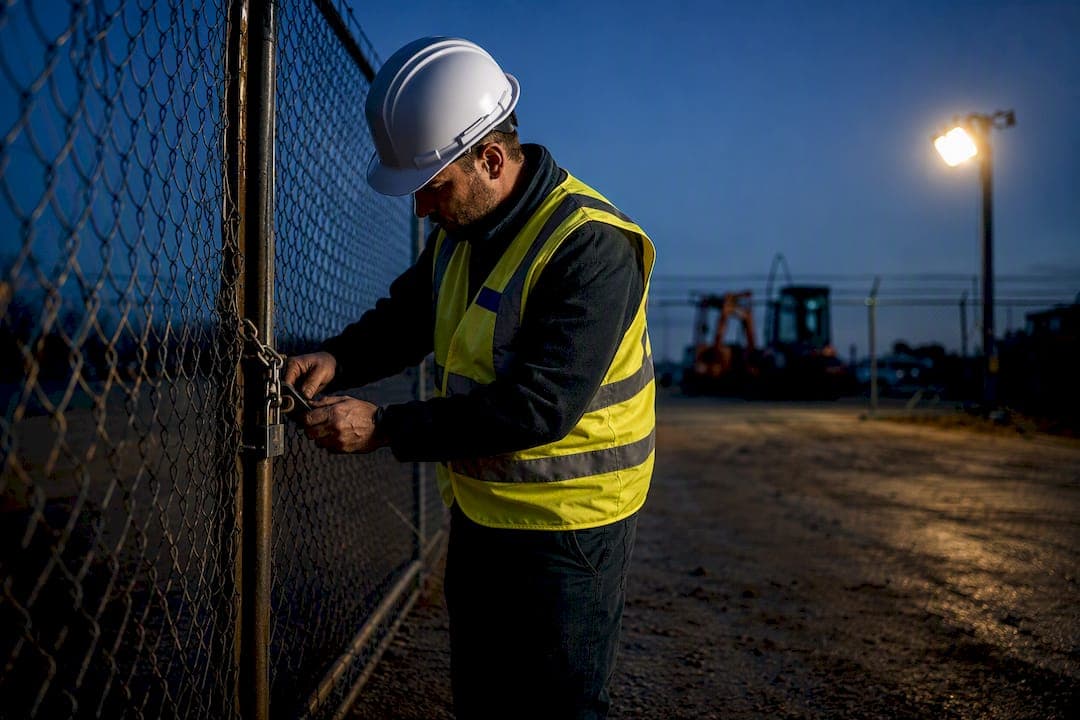
The single best way to reduce jobsite theft is a layered program: physical barriers, controlled access, and monitored detection working together, backed by an accurate asset register. Start with the cheap fixes first, locks, lighting, a documented gate log, and basic surveillance, then add cameras, GPS tracking, and 24/7 monitoring as the site's risk and value grow.
TL;DR:
- Physical barriers like fencing, lighting, and locked storage are quick, low-cost measures that prevent most opportunistic thefts, especially when combined with controlled gate access.
- An accurate asset register with serial numbers, photos, and current locations is critical for police recovery efforts and should be updated regularly to avoid outdated information.
- Cameras should be strategically placed at high-risk points such as entrances and storage areas, paired with remote monitoring and tamper-evident footage storage for effective deterrence and evidence collection.
- GPS tracking and geofencing alerts on heavy machinery help locate stolen equipment quickly, but fast reporting and proper documentation are essential to improve recovery chances.
- Managed surveillance solutions with mobile trailers and 24/7 monitoring are most beneficial for remote or high-value sites, ensuring coverage and evidence collection without relying solely on on-site staffing.
Table of Contents
- 1. Top theft-prevention measures to implement in order
- 2. Physical controls: fencing, access, lighting, and storage
- 3. Asset management: building a register that works
- 4. Technology solutions: cameras, GPS, and remote monitoring
- 5. Operational controls: deliveries, personnel, and internal theft
- 6. Reporting, insurance, and the legal context
- 7. Real-world deployment: managed monitoring on active sites
- 8. Practical trade-offs for busy site managers
- How Secure Techies supports jobsite security
- Sources
- FAQ
1. Top theft-prevention measures to implement in order
Every site benefits from the same core sequence, though the pace depends on budget and how exposed the site is.
- Perimeter fencing: Blocks casual access and slows down anyone without a legitimate reason to be there.
- Controlled gate access: A logged, single point of entry stops unmonitored traffic immediately.
- Lighting: Motion-activated lights remove the dark corners thieves rely on.
- Cameras and video monitoring: Deters opportunistic theft and creates evidence for police reports.
- Locked tool cribs and containers: Keeps small tools and materials out of sight and out of reach.
- Equipment marking and identification: Makes stolen gear harder to resell and easier to trace.
- GPS and telematics on heavy machinery: Tracks location if equipment leaves the site unexpectedly.
- Scheduled deliveries with supervised unloading: Removes the window where materials sit unattended.
- Alarm systems and motion sensors: Adds a layer of detection when the site is unoccupied.
- Regular monitoring and patrol checks: Confirms controls are working and catches gaps early.
Each item builds on the one before it. Fencing and lighting cost little and pay off fast. Cameras and GPS take more investment but close the gaps that physical barriers cannot.
2. Physical controls: fencing, access, lighting, and storage
Physical barriers remain the foundation of any theft-prevention plan, and OSHA's own rules for site layout and equipment storage overlap heavily with good security practice. Site layout requirements call for planned access roads and graded storage areas, which also happen to reduce the unsecured staging that invites theft.
Temporary chain-link fencing works for short jobs, while semi-permanent fencing with anti-climb panels suits longer projects. Gates need a single, logged entry point rather than several informal openings crews use for convenience.
- Fence the full perimeter, not just the street-facing side.
- Assign gate responsibility to one person per shift.
- Position lights at entrances, storage areas, and equipment staging zones.
- Use motion-activated lighting to cover blind spots without running fixtures all night.
- Store tools in locked containers or cribs, never in open trailers overnight.
Storage rules also require clear aisles and posted load limits, which keep materials organized and visible instead of stacked in ways that hide movement or shrinkage. OSHA additionally requires lights or reflectors on unattended equipment near highways, so any security lighting plan should be coordinated with those safety rules rather than treated as a separate task.
Pro Tip: Walk the perimeter at dusk once a month and note every spot where you'd sneak in if you were trying to steal something. Fix those spots first.
3. Asset management: building a register that works
An accurate asset register is the difference between a stolen excavator that comes back and one that disappears for good. According to Office of Justice Programs guidance, precise identifiers and frequent inventories make it far easier for police to enter equipment into stolen-property systems and recover it later.
Before any piece of equipment reaches the site, record it in a central log. The register should include:
- Make, model, and year for every major asset.
- Serial number or PIN, photographed directly off the machine.
- Purchase records or lease documentation proving ownership.
- Photos showing unique markings, paint jobs, or aftermarket parts.
- Current location and assigned crew or operator.
Mobile inventory apps let crews check equipment in and out at the start and end of each shift, which keeps the register current instead of stale. A step-by-step approach to building an asset inventory covers the same discipline used for IT hardware and applies cleanly to jobsite equipment. Update the register every time something new arrives on site, not just at the start of the project.
4. Technology solutions: cameras, GPS, and remote monitoring
Cameras earn their cost fastest at entrances, material staging areas, and wherever high-value tools sit overnight. Placement matters more than camera count: three well-positioned units beat ten scattered ones.
- Cover every gate and the main storage container with overlapping fields of view.
- Add cameras to remote corners of the site where fencing alone won't stop entry.
- Use solar-powered, mobile surveillance trailers on sites without permanent power.
- Pair GPS or telematics on heavy machinery with geofencing alerts and remote immobilization.
- Retain footage with timestamps and store it in a tamper-evident format police can access quickly.
GPS tracking helps locate stolen machines, but location data alone does not stop a piece of equipment from being loaded into a shipping container within hours. Customs and Border Protection has recovered heavy equipment stolen domestically and intercepted before export, which shows recovery is possible but depends on fast reporting and accurate documentation, not tracking hardware by itself.
Pro Tip: Set GPS geofence alerts to trigger the moment equipment leaves the property line, not after it's already miles away.

5. Operational controls: deliveries, personnel, and internal theft
Materials theft often happens in the gaps between delivery and storage, when a pallet sits unattended for an hour. Scheduling deliveries during staffed hours and assigning someone to supervise unloading closes that window.
- Schedule deliveries for times when a supervisor can confirm receipt and move materials to secure storage immediately.
- Use a sign-out sheet or app for tools leaving the crib each morning.
- Run short toolbox talks on theft recognition so crews know what suspicious activity looks like.
- Document any suspected internal theft with dates, witnesses, and inventory discrepancies before confronting anyone.
Employee theft is harder to spot than a break-in, but a consistent sign-out system makes shrinkage visible fast. When numbers don't match the register, that gap is the first thing to investigate.
6. Reporting, insurance, and the legal context
When theft happens, speed and documentation determine whether anything comes back. Photograph the scene, pull CCTV footage before it's overwritten, and file a police report that includes serial numbers and photos from the asset register.
- Notify your insurer the same day, with the police report number attached.
- Provide serials and photos directly to responding officers so items can be entered into stolen-property databases.
- Keep a backup copy of the asset register off-site or in the cloud.
OJP guidance confirms that accurate serial numbers and photographs materially improve reporting and recovery odds. Whether the theft is charged as a felony depends on state law and the value stolen, and federal jurisdiction can apply when equipment crosses state lines or is exported.
7. Real-world deployment: managed monitoring on active sites
Mobile surveillance trailers and 24/7 monitoring shift detection and evidence collection off the crew, which matters most on remote or high-value sites where nobody is watching overnight. A working integration checklist covers coverage mapping across entrances and staging areas, a documented alarm response procedure, footage retention with tamper-evident storage, and a clear chain of custody once police request files.

Sites with modest exposure often manage fine with owned cameras and a locked container. Larger or remote sites, especially those without reliable power or staffing after hours, tend to get more value from a managed surveillance deployment than from piecing together standalone equipment.
8. Practical trade-offs for busy site managers
Fencing, lighting, and a real asset register cost little and stop most opportunistic theft, so they come first regardless of budget. Cameras and GPS earn their place once the site holds enough value to justify the investment. Keep security controls compatible with OSHA storage and lighting rules rather than bolted on separately, and expect that even with strong documentation, recovery is common but never guaranteed.
— Alex
How Secure Techies supports jobsite security
Running a site without staff watching it overnight is a familiar problem, and it's one Secure Techies addresses directly with mobile CCTV trailers and 24/7 monitoring built for construction environments.

- Rapid-deploy, solar-powered CCTV trailers for sites without permanent power.
- Continuous monitoring with alarm response, not just recorded footage reviewed after the fact.
- Network and security integration so cameras and telemetry stay connected and protected.
If your site handles equipment worth protecting, request a site assessment to see what coverage would look like for your project.
Sources
For rules on equipment storage and lighting, see OSHA's equipment standard. For recovery best practices, review OJP's heavy equipment theft guidance. For jurisdiction questions on interstate theft, consult the DOJ criminal resource manual. Keep copies of every police report and serial number list somewhere other than the job site.
- Heavy Equipment Theft | Office of Justice Programs
- Crimes involving property | U.S. Department of Justice
FAQ
What is the most commonly stolen construction equipment?
Small, portable, and high-resale items like generators, compressors, and hand and power tools are frequent targets because they're easy to move without detection. Heavy equipment such as skid steers and excavators gets stolen less often but represents far greater financial loss per incident.
Is it a felony to steal from a construction site?
Whether the theft is charged as a felony depends on the state and the value of what's taken, according to DOJ guidance on property crimes. Federal charges can apply when stolen equipment crosses state lines or gets exported.
What are the security requirements for a construction site?
There's no single universal security rule, but OSHA requires specific safety controls, like lighting or reflectors on unattended equipment near highways, that should be built into any site security plan. Beyond that, requirements depend on the site's location, permits, and insurance terms.
What is the best theft deterrent?
No single device works alone. A layered combination of fencing, controlled access, lighting, cameras, and an accurate asset register gives the strongest protection, since documented serial numbers and photos also improve recovery odds if something does go missing.