
Law firms face a high, targeted risk of ransomware and data-extortion attacks, and the priority in any active incident is containment, verified backups, and client-notification readiness, in that order. Attackers now move from initial access to extortion demands in under an hour in documented cases, which means the response window for a law firm IT manager is measured in minutes, not days.
If you suspect an active compromise right now, take these three actions before anything else:
- Isolate affected systems and enforce conditional access. Pull compromised endpoints off the network, disable remote access for suspect accounts, and require re-authentication with multi-factor enforcement across the firm.
- Confirm your immutable or offline backups and start recovery planning. Verify the last clean backup timestamp for your document management system (DMS) before you touch anything else.
- Notify outside counsel and your cyber insurer immediately. Both have contractual and procedural roles that need to start within hours, not after the dust settles.
In the first hour, someone (usually the IT manager or designated security lead) needs to activate the incident response plan, loop in a partner with signing authority, and start a timestamped log of every action taken. That log becomes evidence, and it becomes the backbone of the notification and insurance conversations that follow. In the first day, the firm should have engaged forensic support, confirmed which systems and matters were touched, and begun drafting client communication language with counsel's input. Preserve, do not delete, anything related to the intrusion. Investigators need the artifacts.
Table of Contents
- Why Law Firm Ransomware Attacks Keep Increasing
- Silent Ransom Group and the Threat Actors Targeting Law Firms
- How Ransomware Attackers Break Into Law Firms
- The Controls That Actually Reduce Ransomware Risk
- What to Monitor and When Managed Detection Makes Sense
- Building an Incident Response Plan That Actually Works
- Deciding Whether to Pay a Ransom Demand
- Third-Party Vendors Are a Bigger Risk Than Most Firms Realize
- A Prioritized Checklist for Law Firm IT Managers
- What Recent Research Means for Your Detection Priorities
- What a Managed IT Partner Should Deliver During a Ransomware Crisis
- Training Staff to Recognize Phishing and Social Engineering
- Protecting Confidential Client Files: Data Management Best Practices
- How Cyber Insurance Claims Work After a Ransomware Attack
- What Actually Matters Most for Law Firm Cybersecurity
- Where to Go for Authoritative Guidance
- Why Prevention Beats Response Every Time
- Get a Ransomware Risk Review From Secure Techies
- Frequently Asked Questions
- Sources
Why Law Firm Ransomware Attacks Keep Increasing
Law firms sit on exactly the kind of data that makes extortion profitable: privileged communications, merger details, litigation strategy, and client financial records that nobody wants exposed. That concentration of sensitive material, combined with a professional culture built around discretion, makes law firms more likely than most industries to pay quietly rather than fight publicly. Attackers know this, and they price their ransom demands accordingly.
The threat landscape has shifted in a specific direction over the past two years. Data-extortion has largely eclipsed pure encryption as the primary threat model, meaning the attacker's leverage isn't "give us money and we'll unlock your files." It's "give us money or we publish your clients' privileged documents." That distinction changes everything about how a firm should respond, because a clean backup no longer solves the problem once data has already left the building.
The legal services sector accounted for a significant share of tracked ransomware incidents in mid-2026, and reporting has documented cybercriminal groups specifically hiring people to physically target U.S. law firms for data theft. That is not a typo. Some of these campaigns have moved beyond phishing emails into old-fashioned social engineering, including impersonating IT support staff over the phone and, in select cases, attempting physical access to office space.
Pro Tip: Before you buy another security tool, map where your firm's most sensitive data actually lives and who can touch it. Most law firm breaches trace back to undocumented access paths, not missing software.
Silent Ransom Group and the Threat Actors Targeting Law Firms
The most consequential recent development for law firm cybersecurity is the FBI's advisory on Silent Ransom Group (SRG), also tracked by some researchers as Luna Moth. SRG doesn't behave like a traditional ransomware crew. Instead of blasting malicious attachments across an organization, the group impersonates IT help desk staff, calls employees directly, and talks its way into remote access tools. In some documented cases, operatives have gone as far as attempting in-person visits to law firm offices.
Mandiant and other investigators tracking SRG-linked campaigns observed intrusions where attackers moved from initial compromise to data exfiltration and ransom demand in under an hour, with some groups working aggressive three-day extortion windows once they have the data. That timeline compression is the single biggest operational change IT managers need to internalize. There is no longer a comfortable window between compromise and consequence.
Press reporting has also documented multiple confirmed law firm breaches tied to social-engineering-based extortion campaigns, including incidents at established firms that led to litigation and insurance disputes after data theft was confirmed. Historically, groups like Maze pioneered the "publish or pay" double-extortion model years ago, and the tactic has only become more refined since, with modern actors skipping encryption entirely in favor of pure data theft and threat of publication. On the enforcement side, the Department of Justice's prosecution of the GozNym network shows that international cybercrime operations targeting American entities do eventually face legal consequences, even if that timeline runs years behind the damage.
The FBI's advisory specifically warns that Silent Ransom Group uses IT impersonation, vishing calls, and in select cases physical visits to gain initial access to law firm endpoints, a departure from the phishing-only playbook most firms have trained against.
What this teaches IT managers is straightforward: technical controls alone won't stop an attacker who calls your paralegal pretending to be internal IT support. Every firm needs a verification protocol for IT support requests, no exceptions, including for calls that sound completely legitimate.
How Ransomware Attackers Break Into Law Firms
The kill chain against law firms typically runs through five stages, and each one gives defenders a chance to catch the intrusion before it becomes catastrophic.
Initial access usually comes through phishing emails, vishing calls impersonating IT support, or business email compromise (BEC) targeting attorneys and paralegals who handle wire instructions and client funds. Privilege escalation follows once the attacker has a foothold, often by harvesting credentials from a compromised endpoint or exploiting an unpatched system. Lateral movement comes next, with attackers using legitimate remote management tools already present on the network to avoid tripping antivirus alerts. Data discovery and exfiltration is where attackers hunt through file shares and the DMS for matter files, then move that data out using tools that look like everyday IT activity. Extortion and contact closes the chain, with a ransom note or direct communication demanding payment under threat of publication.
Investigators tracking recent law firm campaigns have documented exfiltration methods that rely on legitimate tools rather than custom malware: cloud storage uploads, Rclone for bulk file transfer, WinSCP sessions, and even drag-and-drop file transfers during a live screen-sharing session where the attacker has convinced a staff member to grant remote access. This is why traditional antivirus tools often miss these intrusions entirely. Nothing about a Rclone sync looks malicious to a signature-based scanner.
Defenders should instrument detection at each of these points:
- Unusual authentication patterns, especially logins from new devices or locations shortly after a help-desk-style phone call.
- Spikes in outbound data volume, particularly to cloud storage domains the firm doesn't normally use.
- Remote access tool activity outside of scheduled IT maintenance windows.
- New or modified privileged accounts created outside of standard onboarding processes.
- Screen-sharing or remote-control sessions initiated by end users without a corresponding IT ticket.
The MITRE ATT&CK framework's mitigations around lateral movement and credential access map directly onto this kill chain and give defenders a structured way to prioritize which gaps to close first.
The Controls That Actually Reduce Ransomware Risk
Not every security control delivers the same return on effort. Some changes take an afternoon and cut risk substantially; others take a quarter and deliver marginal gains. Prioritizing correctly matters more than buying the most expensive tool on the market.
Multi-factor authentication across every account, especially email and remote access, remains the single highest-impact control a firm can deploy, and it should already be non-negotiable. Least-privilege access with matter-level controls in the DMS follows close behind, since it limits how much an attacker can see even after a successful compromise. Endpoint detection and response (EDR) catches behavioral anomalies that signature-based antivirus misses entirely, which matters given how many recent intrusions use legitimate tools rather than malware.
Backup resilience deserves its own conversation. A modernized 3-2-1 backup strategy, three copies, two different media types, one offsite, needs an immutable or offline component that ransomware cannot touch even with full network access. Restore time objectives matter as much as backup frequency; a backup nobody has tested restoring from is a backup that might not work when you need it. Quarterly restore tests should be standard practice, not an aspiration.
| Control | Impact | Implementation Effort |
|---|---|---|
| MFA on all accounts | High | Low |
| Immutable/offline backups | High | Medium |
| EDR on all endpoints | High | Medium |
| DMS matter-level access controls | High | Medium |
| Network segmentation | Medium | High |
| Email authentication (SPF/DKIM/DMARC) | Medium | Low |
| Conditional access for RMM/VDI | High | Medium |
| Vendor security due diligence | Medium | Medium |
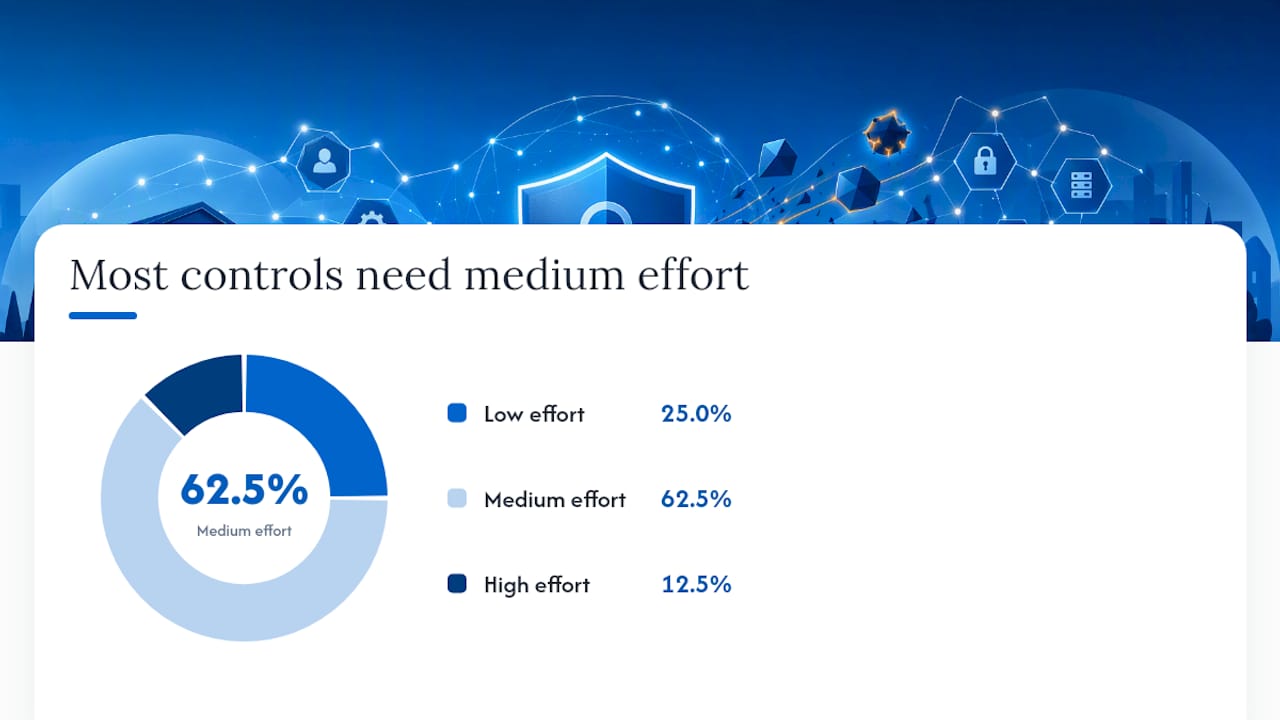
Industry guidance for law firms now frames these controls as part of a professional obligation, not just good practice. The idea that "reasonable efforts" under confidentiality rules includes modern technical measures like MFA, tested backups, and vendor risk management has real teeth in disciplinary and malpractice contexts.
Pro Tip: Run a data inventory before you evaluate a single new security tool. If you don't know which matters live where and who has access, no product on the market will fix that gap for you.
Beyond the technology, three process changes carry outsized weight: a written incident response plan that names roles rather than titles left blank, an annual tabletop exercise that walks through a realistic breach scenario, and documented vendor due diligence for every third party that touches client data.
What to Monitor and When Managed Detection Makes Sense
Detection only works if you're collecting the right signals in the first place. For a law firm, the essential telemetry sources are EDR alerts across every endpoint, authentication logs from your identity provider, cloud storage access logs, remote-monitoring-and-management (RMM) session activity, DMS access logs tied to individual matters, and email gateway telemetry that flags suspicious inbound and outbound traffic.
Many law firms, particularly small to mid-size practices, don't have the staff to watch these signals around the clock. That's the gap managed detection and response (MDR) is built to close. A capable MDR provider brings 24/7 monitoring, active threat hunting, and rapid triage, which matters enormously given how fast SRG-style intrusions move from access to extortion.
Weighing in-house detection against a managed option comes down to a few honest tradeoffs:
- An in-house security operations team gives you full control and institutional knowledge, but staffing 24/7 coverage at a mid-size firm is expensive and hard to sustain.
- A managed detection provider gives you continuous coverage and specialized threat-hunting expertise, but you need a contract that specifies exactly what response looks like.
- Any MDR agreement should guarantee detection time, response time, and clearly defined investigative deliverables, not vague language about "monitoring."
- The contract should also address evidence handling procedures and how the provider integrates with your outside counsel during an active incident.
Providers like Arctic Wolf have published incident timelines and threat intelligence that illustrate how quickly these attacks escalate once access is gained, and that kind of vendor threat reporting is worth reviewing when you're building your own detection priorities. Secure Techies offers 24/7 monitoring designed around exactly these law firm use cases, pairing EDR coverage with DMS-aware access monitoring so alerts tie back to specific matters rather than generic network noise.
Building an Incident Response Plan That Actually Works
An incident response plan that exists only as a PDF nobody has read is worse than no plan at all, because it creates a false sense of preparedness. A working plan assigns specific roles: IT leads containment, a designated security lead or CISO makes technical decisions, outside counsel manages privilege and notification obligations, and a communications lead handles internal and client-facing messaging. Everyone needs to know their role before an incident happens, not during one.
- Contain and preserve. Isolate affected systems, disable compromised accounts, and begin a timestamped log of every action. Do not wipe or reimage anything until forensics has had a chance to capture evidence.
- Engage forensic support and counsel simultaneously. Bringing in outside counsel early helps preserve attorney-client privilege over the investigation itself, which matters if litigation follows.
- Determine scope. Work with forensics to identify exactly which systems, matters, and client data were touched. This drives every downstream notification decision.
- Validate backups before restoring anything. Confirm the backup's integrity and timestamp against the known compromise window so you don't restore data that's already compromised.
- Rebuild in a staged, isolated environment. Bring systems back online in a controlled sequence, verifying integrity at each step rather than restoring everything at once.
- Handle legal and regulatory notifications. Work with counsel to determine which state breach notification laws apply and what the firm's ethical obligations require regarding client notice.
- Engage your cyber insurer throughout, not just at the end. Most policies require notification within a specific window and may dictate which forensic vendors are approved.
- Conduct a post-incident review. Document what worked, what didn't, and update the incident response plan before the next tabletop exercise.
A typical first 72 hours looks like this: hour one is containment and initial notification to counsel and insurer; hours two through twenty-four involve forensic engagement and scope determination; days two and three involve backup validation, staged rebuilding, and the start of client notification drafting. Firms that have rehearsed this sequence in a tabletop exercise move through it noticeably faster than firms encountering it cold. Secure Techies' ransomware protection playbook walks through backup testing and tabletop structure in more detail if you're building this process from scratch.
Deciding Whether to Pay a Ransom Demand
Paying a ransom is a business and legal decision, not a technical one, and it needs input from people beyond the IT department. The factors that should drive the decision include the scope of exfiltrated data, the risk of privilege waiver if privileged material was taken, whether clean backups exist, any regulatory or contractual notice obligations already triggered, the firm's cyber insurance position, and the reputational fallout of either path.
For law firms specifically, the risk of privilege waiver after data exfiltration is often the deciding factor, more than the ransom amount itself. Cyber insurance frequently covers incident response, forensics, and notification costs, but many professional liability carriers explicitly exclude cyber incidents, so confirming your actual coverage before an incident happens matters enormously.
- Confirm the scope of the breach with forensics before any negotiation begins; paying without knowing what was actually taken is a guess.
- Bring in outside counsel to assess privilege exposure and regulatory notification triggers specific to your jurisdiction.
- Contact your cyber insurer immediately; some policies require insurer approval before any ransom payment or negotiator engagement.
- Loop in the board or equity partners for firms above a certain size; ransom decisions carry financial and reputational weight the whole partnership should own.
- Engage a law enforcement liaison, typically through the FBI's local field office, even if you don't expect immediate intervention; it establishes a record and may unlock resources.
- Weigh the decision against your restore capability; if immutable backups are intact and validated, the calculus shifts heavily toward not paying for encryption but still addressing extortion over stolen data.
Is paying a ransom illegal? Paying a ransom itself is not automatically illegal under U.S. law, but payments to sanctioned entities or organizations on OFAC's sanctions list can create serious legal exposure. This is a decision that requires counsel's input, not a unilateral IT call, and firms should treat that FBI advisory guidance as a starting point rather than a complete legal answer.
Third-Party Vendors Are a Bigger Risk Than Most Firms Realize
E-discovery platforms, cloud storage providers, virtual dataroom vendors, and outsourced document processing firms all touch sensitive client data, and a breach at any one of them becomes your breach too. Law firms often underestimate this exposure because the vendor relationship feels like someone else's security problem. It isn't.
A proper vendor due-diligence checklist should confirm SOC 2 Type II certification, clear breach notification terms with specific timeframes, data return and portability guarantees when the relationship ends, encryption standards for data at rest and in transit, a current subprocessor list, and contractual audit rights that let you verify claims rather than take them on faith.
When negotiating vendor contracts, push for specific clauses rather than vague assurances: a breach notification window measured in hours, not "promptly"; minimum cyber insurance coverage requirements; and explicit incident cooperation obligations that require the vendor to support your forensic investigation, not just their own. Guidance on data leakage prevention in regulated industries covers many of these same contractual and technical safeguards in more depth, and it's worth reviewing before your next vendor renewal.
A Prioritized Checklist for Law Firm IT Managers
Ransomware defense works best as a timeline, not a wish list. Trying to do everything at once guarantees nothing gets done well.
| Timeframe | Priority Actions | Suggested Owner |
|---|---|---|
| First hour/day | Containment, evidence preservation, critical account lockout, notify counsel and insurer | IT Manager / Security Lead |
| First week | Restore DMS from immutable backups, rotate privileged credentials, run tabletop exercise, audit key vendors | IT Manager / Firm Administrator |
| First quarter | Complete data-flow inventory, implement matter-level access controls, test restore SLAs, deploy continuous monitoring, run staff security training | IT Manager / Managing Partner |
The medium-term items matter as much as the emergency response, because a firm that doesn't rotate credentials and audit vendor access after an incident often gets hit again within months. The long-term items, particularly the data-flow inventory and matter-level access controls, are what actually shrink the attack surface rather than just responding faster to the next attempt.
What Recent Research Means for Your Detection Priorities
The compressed attack timeline documented in recent law firm campaigns should reshape how IT managers think about detection speed. When attackers move from initial compromise to extortion in under an hour, a detection system that alerts within a few hours has already lost the race. Your recovery time objectives need to assume the attacker had full access well before you noticed anything.
The legal sector's outsized share of tracked ransomware incidents in mid-2026 confirms this isn't a theoretical risk that might eventually reach law firms. It has already arrived and settled in as a persistent pattern. Security researchers tracking these trends consistently point to the same root cause across firms that got hit hardest: procedural gaps, like undocumented data inventories and poorly managed DMS permissions, tend to matter more than which specific security product a firm did or didn't buy.
Pro Tip: Weight your telemetry investment toward detecting exfiltration patterns, like unusual outbound data volume or unfamiliar cloud storage destinations, rather than only watching for encryption events. By the time files start encrypting, the data theft that matters most has usually already happened.
What a Managed IT Partner Should Deliver During a Ransomware Crisis
A capable managed IT and security partner does more than install software and wait for alerts. For a law firm specifically, that partnership should include 24/7 monitoring tuned to legal workflows, coordinated incident response rather than a generic ticketing process, regular backup verification with documented restore testing, help configuring matter-level DMS access controls, and compliance audit support for frameworks like HIPAA, GDPR, SEC, and CMMC that many firms are contractually obligated to meet.
A sample incident response playbook that a managed partner should be able to execute looks like this: alert triage within minutes of detection, immediate containment steps coordinated with your internal team, a clean handoff to forensic investigators without losing the evidence chain, orchestrated recovery that prioritizes matter-critical systems first, and direct communication support to help your leadership and outside counsel stay aligned throughout.
When evaluating any managed partner's contract, look past the marketing language and confirm specifics:
- What are the actual guaranteed detection and response time SLAs, in writing, not marketing copy?
- How does the provider handle evidence during an active investigation, and does that process hold up if litigation follows?
- Does the provider have experience coordinating directly with outside counsel during a live incident?
- Are compliance audits (HIPAA, SOC 2, CMMC) included, or are they a separate engagement?
Pro Tip: Ask any prospective managed IT partner to walk you through their last three incident response engagements, without naming clients. If they can't describe a specific sequence of actions, they haven't actually run one.
Secure Techies builds these capabilities specifically around law firm IT services, pairing 24/7 monitoring with the kind of matter-aware access controls that generic managed service providers often miss entirely.
Training Staff to Recognize Phishing and Social Engineering
Technology controls fail regularly against a well-executed phone call, which is exactly why Silent Ransom Group leans on vishing and IT impersonation instead of malware. Training programs for law firm staff need to go beyond the standard "don't click suspicious links" module that most compliance training defaults to.

Effective training for legal staff should simulate the specific tactics attackers actually use against firms: a phone call from someone claiming to be IT support asking for a password reset, an urgent email that mimics a partner's writing style requesting a wire transfer, or a request to install remote access software to "fix a problem." Paralegals and administrative staff, who often have broad access to client files and handle routine IT requests, deserve particular attention since they're frequently the first target in these campaigns.
A verification protocol solves the impersonation problem directly: any request for credentials, remote access, or account changes gets confirmed through a separate, known channel, never the channel the request arrived on. That single rule, consistently enforced, defeats most of the vishing tactics documented in recent law firm attacks. Running a phishing simulation quarterly, with results reported to firm leadership rather than buried in an IT report nobody reads, keeps the training relevant instead of theoretical. Guidance on business email compromise prevention covers the specific red flags staff should watch for in wire transfer and credential-related requests.
Protecting Confidential Client Files: Data Management Best Practices
Law firms generate an enormous volume of sensitive material across matters, and most firms have never mapped exactly where all of it lives. That gap is the starting point for nearly every serious breach discussed throughout this guide.
Matter-level access controls in the document management system should restrict file visibility to attorneys and staff actually assigned to that matter, not the whole firm by default. Encryption at rest and in transit needs to be standard for every DMS and file-sharing tool the firm uses, and email authentication protocols, SPF, DKIM, and DMARC, should be configured correctly to prevent domain spoofing that enables convincing phishing campaigns. Version control and audit logging within the DMS let you reconstruct exactly who accessed which file and when, which becomes critical during both detection and forensic investigation.
Physical security still matters too, particularly given documented cases of attackers attempting in-person access to law firm offices. Visitor logs, badge access to server rooms, and clear desk policies for physical documents containing client information all reduce the same risk from a different angle. Firms using platforms like Logikcull or similar e-discovery and document review tools need to extend the same access-control discipline to those platforms, since they often contain the exact sensitive material attackers are hunting for. Reviewing your firm's current setup against a security and compliance guide built for legal practices is a reasonable starting point if you haven't done a full access audit recently.
How Cyber Insurance Claims Work After a Ransomware Attack
Cyber insurance is frequently necessary to cover the real costs of a ransomware incident: incident response, forensic investigation, legal counsel, client notification, and in some cases the ransom payment itself. But coverage details vary enormously between policies, and many firms discover gaps only after they need to file a claim.
The claims process typically starts with immediate notification to the carrier, often within a specific window (24 to 72 hours is common) after discovering the incident. Most policies require using an approved panel of forensic investigators and outside counsel rather than letting the firm choose freely, so knowing your carrier's approved vendor list before an incident happens saves critical time. Documentation matters enormously throughout the claims process; the timestamped incident log mentioned earlier in this guide becomes a key piece of evidence for demonstrating the scope of the incident and the reasonableness of your response.
A significant coverage gap many firms discover too late: many professional liability (PL) policies explicitly exclude cyber incidents, meaning a firm relying solely on its malpractice coverage may have no protection at all against ransomware costs. Standalone cyber policies typically cover breach response costs, business interruption, and sometimes regulatory fines, but coverage limits and sublimits for specific categories like ransom payments often sit well below the policy's headline number. Reviewing your actual policy language with your broker before renewal, not during an active incident, is the only reliable way to know what you're actually covered for.
This guide provides general information and should not substitute for advice from qualified legal counsel or a licensed insurance professional regarding your firm's specific obligations and coverage.
What Actually Matters Most for Law Firm Cybersecurity
Preventing a costly ransomware incident depends most on data inventory, tested immutable backups, enforced MFA, and a rehearsed incident response plan working together.
The most defensible security posture for a law firm combines documented data inventories, tested immutable backups, enforced multi-factor authentication, and a rehearsed incident response plan.
| Point | Details |
|---|---|
| Map your data first | Document which matters live where in the DMS and who can access them before buying new security tools. |
| Test backups quarterly | Verify immutable backups actually restore within your target recovery time, not just that they exist. |
| Enforce MFA everywhere | Require multi-factor authentication on every account, especially email and remote access tools. |
| Rehearse incident response | Run an annual tabletop exercise so roles and decisions are already clear before a real incident hits. |
| Vet third-party vendors | Require SOC 2 Type II certification and firm breach-notification timeframes from every vendor touching client data. |
| Partner with a managed provider | Secure Techies delivers 24/7 monitoring, backup verification, and DMS-aware access controls built for law firm workflows. |
Where to Go for Authoritative Guidance
A handful of primary sources should anchor every law firm's ongoing security planning, and they're worth bookmarking rather than reading once and forgetting.
- The FBI's Silent Ransom Group advisory documents the specific IT-impersonation and vishing tactics used against law firms, making it essential reading for training program design.
- The FBI's broader ransomware prevention guidance for CISOs offers practical technical mitigations that translate directly into law firm environments.
- DOJ's press coverage of the GozNym prosecution demonstrates that international cybercrime networks targeting U.S. entities do face legal consequences, useful context when discussing law enforcement engagement with firm leadership.
- The ABA-aligned best practices guide connects specific technical controls to the professional and ethical obligations law firms already operate under.
- MITRE ATT&CK's mitigation framework gives IT managers a structured taxonomy for mapping technical defenses to specific attacker techniques.
Why Prevention Beats Response Every Time
The uncomfortable truth about law firm ransomware is that most firms only take it seriously after they've already been hit. By then, the conversation shifts from prevention to damage control, and damage control is always more expensive, slower, and less certain than the fifteen-minute conversation about MFA enforcement that got postponed six months earlier.
What strikes me most about the incidents documented throughout this guide isn't the sophistication of the attackers. It's how often the actual entry point was mundane: an unverified phone call, a permissions setting nobody reviewed in years, a vendor contract signed without reading the breach notification clause. Silent Ransom Group didn't need custom malware to compromise law firms with an under-one-hour extortion timeline. They needed a firm that hadn't trained staff to hang up and call back through a known number.
The firms that recover fastest from these incidents aren't the ones with the most expensive security stack. They're the ones that tested their backups before they needed them and ran a tabletop exercise before a real incident forced everyone to improvise. That's not a comforting message if you're looking for a single product that solves the problem, but it's the honest one.
Get a Ransomware Risk Review From Secure Techies
Law firms don't need another generic managed IT vendor treating ransomware as a checkbox item. Secure Techies is built specifically around the compliance pressures and confidentiality demands legal practices carry, pairing 24/7 monitoring with matter-aware access controls, verified backup testing, and incident response coordination designed to work alongside your outside counsel rather than around them.
If you're not confident your firm could survive a Silent-Ransom-style intrusion right now, that uncertainty is worth resolving before an attacker resolves it for you. Secure Techies' managed cybersecurity services cover endpoint detection, threat hunting, and incident response orchestration built around the exact attack patterns detailed throughout this guide. Reach out for a prioritized risk review, and get a clear, ranked list of what to fix first, before the next call from "IT support" turns out not to be internal at all.
Frequently Asked Questions
Is paying a ransomware ransom illegal for a law firm? Paying a ransom is generally not illegal under U.S. law, but payments to individuals or groups on OFAC's sanctions list can create serious legal exposure. Involve outside counsel before making any payment decision.
How fast do ransomware attacks against law firms actually move? Documented cases show attackers moving from initial compromise to data exfiltration and ransom demand in under an hour in some Silent Ransom Group campaigns, with extortion windows as short as three days.
Does professional liability insurance cover ransomware incidents? Often not. Many professional liability policies exclude cyber incidents entirely, which is why a standalone cyber insurance policy is typically necessary to cover incident response, forensics, and notification costs.
What's the single highest-priority control for a law firm to implement first? Multi-factor authentication across every account, paired with a documented data inventory showing who can access which client matters in the DMS.
Should a law firm notify clients after a ransomware attack? Notification obligations depend on state breach notification laws and the specific data involved. Work with outside counsel immediately to determine what's legally required and what protects the firm's professional obligations to clients.
Sources
- Silent Ransom Group Targeting Law Firms — FBI advisory (PDF)
- Silent Ransom Group Hits US Law Firms in Escalating Extortion Attacks — DarkReading
- Cybercriminals hire burglars to target U.S. law firms, CNN
- GozNym cyber criminal network operating out of Europe targeted American entities — DOJ
- Best practices for law firms to meet cybersecurity obligations — Alanet